Small Hands, Mighty Impact: Tamariki Leading Kaitiakitanga for a Predator‑Free Future

When tamariki are trusted as kaitiaki, their impact can extend far beyond the kindergarten gate. It can reshape not only their local landscape, but the future of a nation.
In a small rural kindergarten, a group of tamariki have become active leaders in Predator Free Muriwai, a community initiative working to restore native bush and protect endangered wildlife from introduced predators. What began as curiosity about the birds in their ngahere has grown into purposeful environmental action with measurable impact.
The science is sobering. Across Aotearoa, over 4,000 native species are currently threatened or at risk of extinction. The impact of introduced mammals such as rats, stoats and possums remains one of the leading causes of decline. Without intervention, many of our native manu, reptiles and invertebrates will continue to disappear within our lifetime. Community-led predator control is now recognised nationally as critical to reversing these trends.
These tamariki are not waiting for someone else to act. As part of their everyday curriculum, they maintain their own trap line, checking, resetting and recording findings with care and responsibility. They understand why this work matters. Conservation is not a concept for them, it is a lived practice.
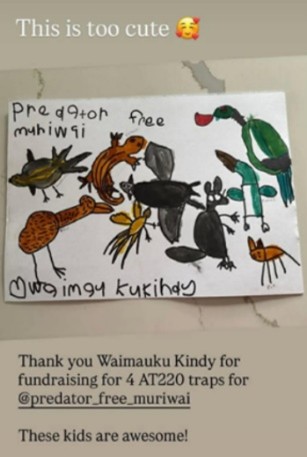
Identifying the need for more traps in their wider community, the tamariki designed and produced tea towels featuring their artwork and environmental messaging. The response was extraordinary. The first run sold out rapidly, requiring a second print run to meet demand. Through their fundraising efforts, they recently gifted four new predator traps to Predator Free Muriwai.
On average, each trap can eradicate more than 100 pests per year. Four traps equate to potentially 400+ fewer predators annually in surrounding native bush. This is not symbolic action. It is tangible, ecological impact, led by our youngest citizens.
Their work aligns powerfully with national priorities, including the Government’s Predator Free 2050 goal and the education sector’s increasing focus on sustainability, local curriculum design and authentic community partnerships. This is Ako me te Auaha in action, reciprocal learning that moves beyond theory into transformation. It is Kaitiakitanga embodied, stewardship not as aspiration, but as daily habit.
Importantly, the impact is generational.
These tamariki are growing up believing that environmental restoration is normal, necessary and within their sphere of influence. Their whānau are engaged. Their community is mobilised. Their actions challenge the outdated notion that young children are passive recipients of knowledge. Instead, they are active citizens shaping ecological futures.
When we speak of building sustainable futures for Aotearoa, this is what it looks like: children who understand biodiversity loss, who take collective responsibility, who fundraise, advocate and act. Children who see themselves as part of the solution.
The ripple effect of their mahi will extend far beyond the sale of tea towels. It will be heard in birdsong returning to regenerating bush. It will be seen in strengthened community networks. It is shaping young citizens who understand that leadership is not about age, but about action.
This is kaitiakitanga in its most powerful form, values translated into measurable impact.
He taonga tuku iho in the making.