From One Child’s Idea to a Community Harvest

When we treat children’s words as seeds rather than stories, extraordinary things begin to grow.
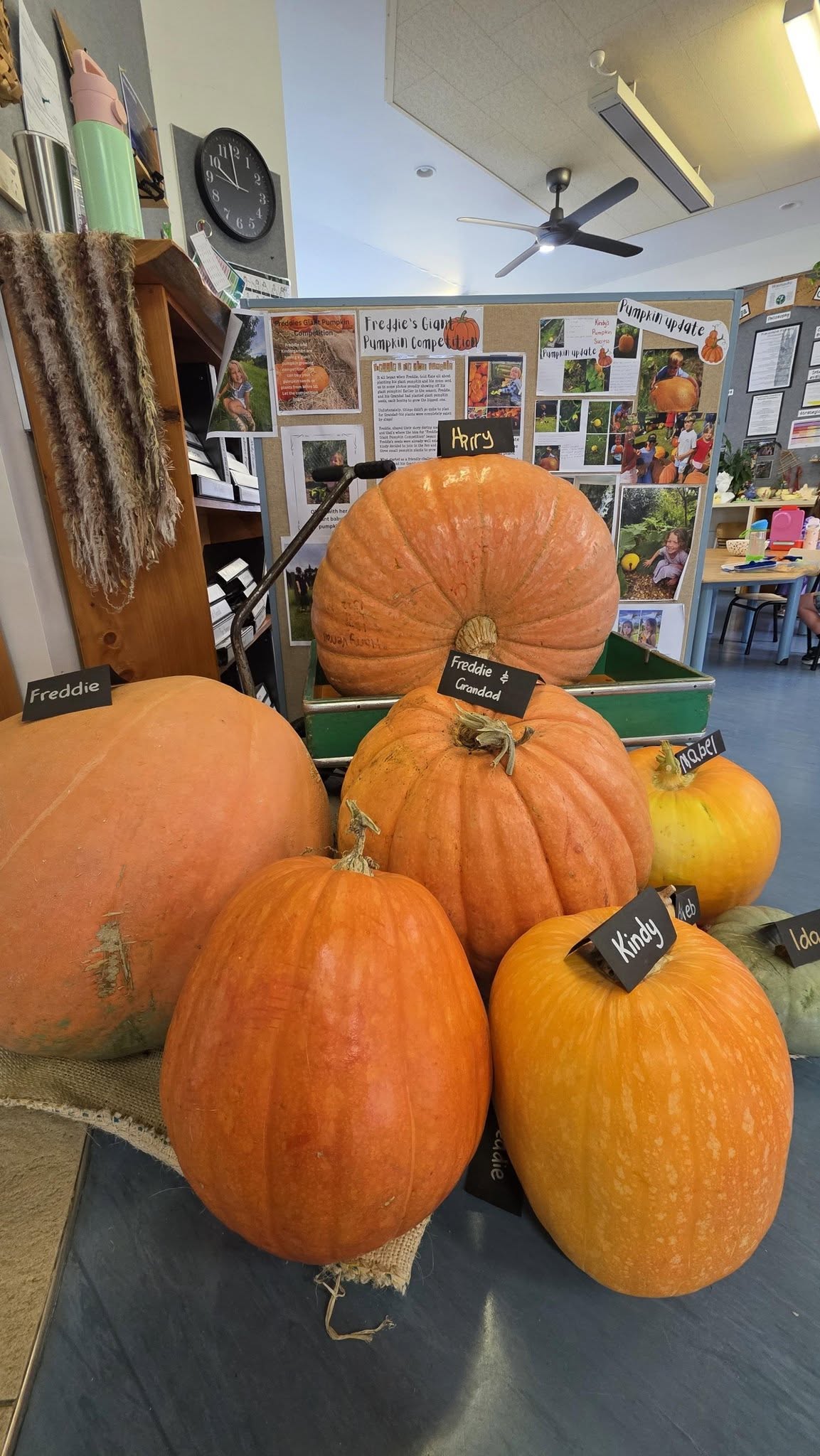
It began with a simple declaration. A child shared, with quiet determination, that he was in a pumpkin growing competition with his grandad. It could have passed as a sweet anecdote, a fleeting moment of home life brought into the kindergarten day. Instead, his teachers paused. They leaned in. They asked more questions.
From that moment, the curriculum shifted.
Conversations about pumpkins turned into investigations, how they grow, what they need, how big they might become. Seeds were planted in the kindergarten garden. Measuring tapes appeared. Predictions were recorded. Tamariki debated sunlight, soil quality and watering schedules with scientific intensity. The competition between a boy and his grandad slowly became something much bigger.
Whānau began growing pumpkins at home. Photos were shared. Updates were given at drop-off and pick-up. Advice was exchanged across fences and inboxes. Before long, the kindergarten announced its own community pumpkin competition. What started as one child’s interest became a collective endeavour, drawing families together in shared purpose and playful rivalry.
This is what happens when practice is intentionally responsive. When teachers resist the urge to redirect and instead amplify a child’s voice, learning becomes relational. The boundary between home and kindergarten solidifies. Curriculum is no longer something delivered, it is something co-constructed.
The pumpkin competition became a living example of whanaungatanga in action. Tamariki saw their ideas shape real events. Whānau experienced the kindergarten not just as a service, but as a hub of connection. Gardening tips, laughter and friendly banter flowed through the community.
More than vegetables were grown. Confidence was grown. Agency was grown. Community was grown.
At its heart, this story is not about pumpkins. It is about the power of listening. It is about kaiako who understand that children’s inquiries are not interruptions to the curriculum, they are the curriculum. It is about kindergartens positioned at the centre of thriving communities, where the ideas of tamariki ripple outward and draw people in.
One child’s competition with his grandad became a shared narrative for an entire community. A reminder that when we slow down, pay attention and respond with intention, even the smallest seed of an idea can flourish far beyond the garden bed.
This is the ethos of kindergarten: nurturing connected communities, one child-led idea at a time.